There is no single cleaning schedule that works for every home, condo, hotel or restaurant. How often a soft surface needs professional treatment depends on how heavily it is used, its condition, whether there are pets or children, visible soiling, odors, allergy concerns and how much guest turnover the property has.
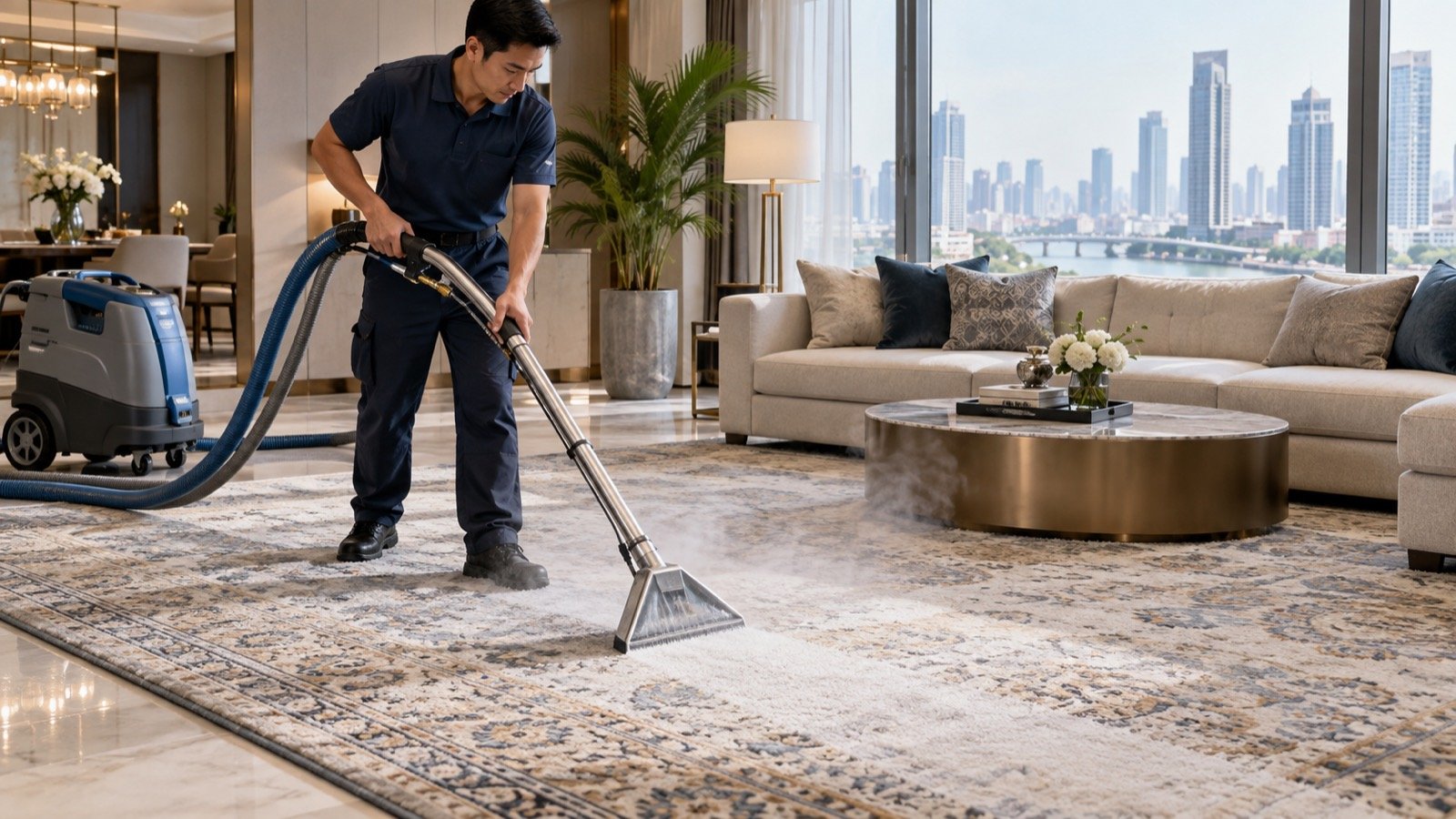
Steam Cleaning Bangkok treats sofas, mattresses, carpets, rugs, curtains and upholstered furniture using a two-step approach: HydroClean extraction to remove embedded residue, followed by SteamPro Hygienic Decontamination at 180°C for high-temperature treatment.
For Bangkok homes, condos, hospitality properties and F&B venues, the more useful question is not “What is the fixed schedule?” but “What condition is the surface in, and what level of treatment does it need?”
Is There a Fixed Cleaning Schedule for Soft Surfaces?
No. The ideal cleaning frequency depends on how heavily the surface is used, its condition and the environment it is in.
A fixed rule such as “clean every six months” may be too simplistic because two sofas, mattresses or carpets can experience very different levels of use.
Factors that matter include:
- daily use
- number of occupants
- pets
- children
- visible stains
- odors
- allergy concerns
- commercial or guest turnover
A lightly used sofa in a private room may not need the same level of attention as a sofa used every day by a family or a guest-facing sofa in a hotel lobby.
The same applies to mattresses, carpets and curtains.
Condition-based cleaning is therefore more practical than relying only on a calendar.
How Often Should You Clean a Sofa?
A sofa should be professionally cleaned when surface vacuuming is no longer enough to deal with embedded residue or when there are visible signs of heavy use, odors or accumulated soiling.
The exact frequency depends on how the sofa is used.
A sofa may need more frequent assessment when there are:
- pets
- children
- food and drink spills
- heavy daily use
- guest-facing use
- allergy concerns
- visible soiling in cushions or seams
For homes and condos, routine vacuuming can help maintain the surface, but it does not perform the same role as professional extraction and decontamination.
Steam Cleaning Bangkok uses HydroClean to remove embedded organic residue and SteamPro to address biological contamination with high-temperature steam.
If you want to understand the treatment in more detail, see the article on sofa cleaning in Bangkok or the full service protocol.
Signs Your Sofa Needs Professional Cleaning
A sofa may be ready for deeper treatment when you notice:
- visible discoloration or soiling
- persistent odor
- food or drink residue
- pet-related residue
- dirt collecting in seams
- cushions that look or feel heavily used
- repeated daily contact without previous deep cleaning
The first stage of the Steam Cleaning Bangkok process is designed to remove embedded residue from the upholstery.
The second stage uses SteamPro at 180°C for decontamination.
This is why a professional service is different from simple surface vacuuming or spot cleaning.
How Often Should You Clean a Mattress?
A mattress may need professional treatment when there is heavy use, visible soiling, persistent odor, long periods without deep cleaning, or concerns about dust mites and allergen-containing residue.
Mattresses are used for around 6–8 hours every night, which means they receive long and repeated contact with the body.
Over time, material such as:
- skin oils
- organic residue
- dust mite-related material
- allergens
- other biological contamination
can accumulate on the mattress surface and seams.
There is no universal schedule that applies to every mattress.
The condition of the mattress, how heavily it is used and the needs of the household should determine when deeper treatment is appropriate.
For more detail, see the guide to mattress cleaning in Bangkok.
Signs Your Mattress Needs Deep Cleaning
A mattress may need professional deep cleaning when there is:
- visible staining
- persistent odor
- long-term use without professional treatment
- allergy-related concern
- heavy nightly use
- a change in occupancy
- repeated hotel or serviced-residence turnover
In hospitality settings, mattresses may need more frequent assessment because they are used by changing guests.
In a private home, the decision can be based more on condition, household use and hygiene concerns.
How Often Should You Clean Carpet?
How often to clean carpet depends mainly on foot traffic, visible soiling, pets, food residue, allergy concerns and whether the carpet is used in a residential or commercial environment.
A low-traffic carpet in a private bedroom may remain in good condition longer than a living-room carpet, restaurant carpet or guest-facing hotel carpet.
Factors that can increase the need for professional carpet cleaning include:
- frequent foot traffic
- visible traffic lanes
- pets
- children
- food or drink spills
- persistent odor
- allergy concerns
- commercial use
- hospitality turnover
For clients looking for carpet cleaning in Bangkok, the best approach is to assess the actual carpet condition rather than follow a fixed calendar.
HydroClean extraction is used to remove embedded dirt and organic residue, while SteamPro adds a separate high-temperature decontamination stage.
When Does Carpet Need More Than Vacuuming?
Vacuuming is useful for routine maintenance, but it mainly removes loose surface material.
A carpet may need deeper treatment when there is:
- embedded soil
- food or drink residue
- pet-related residue
- persistent odor
- visible traffic patterns
- allergen-containing material
- long-term accumulation within the carpet pile
HydroClean is used to lift embedded material from the fibers.
SteamPro is then used for thermal decontamination.
This is the distinction between routine maintenance and professional deep treatment.
How Often Should You Clean Curtains?
Curtains should be professionally treated when dust, visible soiling, odor or long-term exposure has built up beyond what light maintenance can handle.
For clients looking for curtain cleaning in Bangkok, the actual condition and fabric type matter more than a fixed schedule.
Steam Cleaning Bangkok states that curtains can usually be treated in place, without removing them from the track.
Where needed, HydroClean is used as a pre-treatment for soiling, followed by SteamPro decontamination.
Curtains may need more frequent attention when they are:
- near frequently opened windows or doors
- exposed to dust
- in homes with pets
- used in hospitality environments
- used in F&B venues
- visibly soiled
- holding persistent odor
What Affects Curtain Cleaning Frequency?
Several factors influence how quickly curtains need professional treatment.
These include:
- how often the room is used
- how close the curtains are to windows and entrances
- visible dust accumulation
- fabric condition
- presence of pets
- guest turnover
- restaurant or hospitality use
Different fabrics can also require different handling.
For that reason, curtain cleaning should be based on condition and material rather than a single universal schedule.
Residential vs Commercial Cleaning Frequency
The same soft surface can require very different cleaning frequency depending on where it is used.
Residential
In homes, condos and apartments, cleaning frequency depends on:
- family size
- pets
- children
- daily use
- allergy concerns
- visible soiling
- how often the surface is maintained
A private sofa or mattress may need less frequent professional treatment than the same item in a commercial environment.
Hospitality
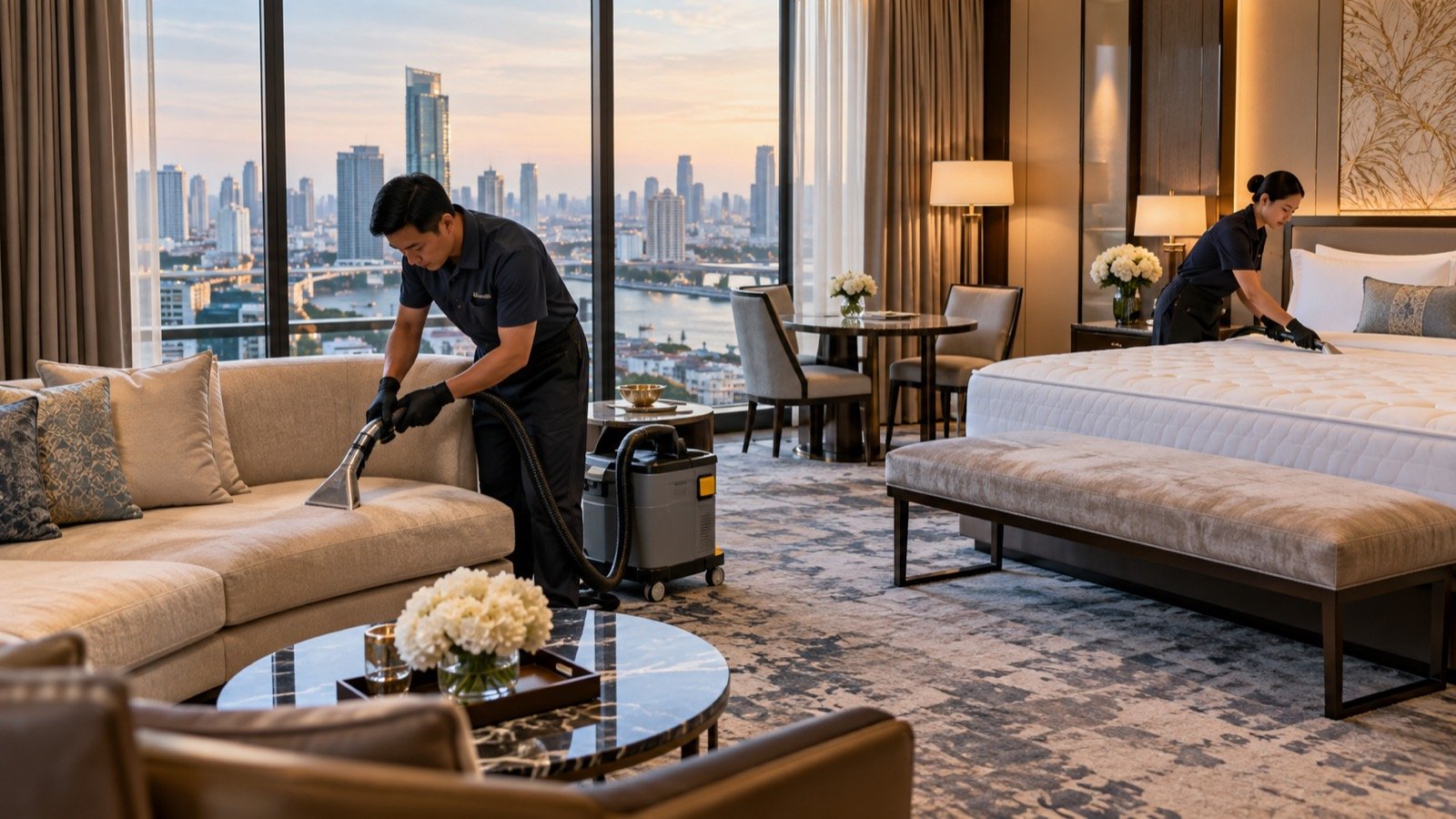
Hotels and branded residences usually have more frequent guest turnover.
This means mattresses, sofas, curtains and other guest-facing soft surfaces may need more regular inspection.
Steam Cleaning Bangkok’s hospitality service focuses on documented treatment of guest-facing surfaces and supports this through its Cleara program.
Food & Beverage
Restaurants, cafés and other F&B venues have their own challenges.
Guest-facing surfaces can include:
- upholstered seating
- banquettes
- booths
- curtains
- carpets
- rugs
High usage, food residue, drink spills and guest turnover can all increase the need for professional assessment.
Should You Clean on a Calendar or Based on Condition?
Condition-based cleaning is more practical than following a fixed calendar. High-use surfaces should be assessed according to visible soiling, odor, embedded residue, allergen concerns and how frequently people interact with them.
A schedule can still be useful for maintenance planning, especially in hotels or restaurants, but it should not replace actual inspection.
A surface that is heavily used may need treatment sooner than expected.
A lightly used surface may not.
The condition should guide the decision.
What Is the Difference Between Routine Cleaning and Deep Cleaning?
Routine cleaning and professional deep treatment do not perform the same job.
| Routine Cleaning | Professional Deep Treatment |
|---|---|
| Vacuuming | HydroClean extraction |
| Surface wiping | Embedded soil removal |
| Spot care | Organic residue removal |
| Appearance-focused | Hygiene + decontamination |
| No thermal treatment | SteamPro at 180°C |
The simplest way to understand the difference is:
Extraction cleans. Steam decontaminates.
Routine care helps maintain appearance.
Professional treatment addresses deeper material and biological contamination.
When Should You Choose Professional Cleaning?
Professional cleaning may be worth considering when:
- a surface looks clean but still smells
- visible staining appears
- dirt keeps returning
- the surface receives heavy daily use
- there are pets or children
- there are allergy concerns
- there is frequent guest turnover
- the item is used in a hotel or restaurant
- it has been a long time since the last deep treatment
These conditions do not automatically mean every surface requires the same process, but they are good reasons to have it assessed.
Does Professional Cleaning Help With Allergens?
Professional cleaning can help reduce embedded residue and allergen-containing material from soft surfaces.
HydroClean is used to remove physical material from the fibers or fabric.
SteamPro adds a separate high-temperature decontamination stage.
This can be useful for homes that are particularly concerned about dust mites, residue and indoor hygiene.
However, professional cleaning should not be described as a medical treatment or as a cure for allergies.
Its role is to improve the cleanliness and hygiene of the treated surface.
Is the Cleaning Process Chemical-Free?
The two stages should be described separately.
SteamPro uses high-temperature dry steam rather than liquid chemical disinfectants.
HydroClean is described by Steam Cleaning Bangkok as a non-toxic enzymatic extraction treatment that leaves no chemical residue.
SteamPro is also described as leaving:
- no residue
- no off-gassing
- no chemical waiting period
This makes the process suitable for clients looking for a deeper soft-surface treatment without relying on conventional liquid chemical disinfection.
You can read more about the process on The Science.
How Steam Cleaning Bangkok Treats Soft Surfaces
Steam Cleaning Bangkok uses a two-step protocol for soft surfaces.
The process generally includes:
- Inspection
- HydroClean extraction where needed
- SteamPro Hygienic Decontamination at 180°C
- Drying
- Return to use
This approach is used for:
- sofas
- mattresses
- carpets
- rugs
- curtains
- upholstered furniture
The exact treatment can vary depending on the material and condition of the item.
For specialist leather such as aniline, suede and nubuck, a separate hand-treatment process is used.
You can review the full process on The Full Protocol.
Frequently Asked Questions
How often should you clean a sofa?
There is no fixed schedule for every sofa. Frequency depends on daily use, pets, children, visible soiling, odor and whether the sofa is used in a private home or guest-facing environment. Professional cleaning is worth considering when routine vacuuming no longer addresses the condition of the upholstery.
How often should you clean a mattress?
Mattress cleaning frequency should be based on condition and use. Heavy nightly use, visible soiling, odor, allergy concerns or a long period without deep treatment are signs that professional cleaning may be appropriate.
How often should you clean carpet?
How often to clean carpet depends on foot traffic, pets, food residue, visible dirt, allergy concerns and whether the carpet is used in a home, hotel or restaurant. High-traffic carpets generally need assessment more often than low-traffic carpets.
How often should curtains be cleaned?
Curtains should be professionally cleaned when dust, odor or visible soiling has built up beyond what routine care can manage. Frequency depends on fabric type, room use, exposure and whether the curtains are in a residential or commercial environment.
Should homes with pets clean soft surfaces more often?
Homes with pets may need more frequent assessment because pet-related residue, odor and daily contact can accumulate on sofas, carpets and other soft surfaces.
Do hotels need more frequent cleaning?
Hotels may need more frequent inspection because of regular guest turnover and repeated use of mattresses, sofas, carpets and curtains. The exact schedule should depend on the condition and usage of each surface.
Is professional cleaning necessary if I vacuum regularly?
Vacuuming is useful for routine maintenance, but it mainly removes loose surface material. Professional treatment can remove deeper residue and add a separate high-temperature decontamination step.
Can all four surfaces be treated with the same method?
No. The core protocol may involve HydroClean and SteamPro, but the treatment is adjusted according to the surface, material and condition. Specialist leather is handled separately using a material-specific hand-treatment process.
You can also explore residential soft-surface cleaning, hotel soft-surface hygiene, restaurant and F&B hygiene, The Full Protocol, or the FAQ.